UfSO: (A)History and Classroom Consciousness

As was announced back in September of last year (2013), the UfSO has ceased operations. Since that time, a number of its retired professors have been approached and asked to sell their story, along with that of the UfSO itself.
In light of this, it was decided amongst those former faculty who were still in contact, that in order to put and end to such requests, the story would, at least in part, have to be told.
Having decided to do so, the question quickly became one of finding a suitable outlet for such an activity. We had no interest in selling our story, and sought a publication in which this act of historicising might at least have some strategic impact upon on-going struggles.
In the end, a new journal, entitled Argos Aotearoa, published by a UfSO sympathising group in Auckland, New Zealand was carefully selected from the various requests. It was felt that the opportunity to contribute in another theatre of operations, quite literally on the other side of the world, was a far better option than some art, politics or academic rag in the UK.
Prof. Marcus Karlsberg and Prof. Verity Mensonge stepped up to the challenge, penning the following attempt at (a)history. It is necessarily preliminary and partial, there is much more that could be said by way of analysis, or indeed, in terms of unearthing some of the more sordid details. We leave that work to others, here is our version of events.
Pick up a hard copy, or download the full publication here: Argos Aotearoa
We have also made a PDF of Profs Karlsberg and Mensonge’s article available here: UfSO: (a)History and Classroom Consciousness.
Alternatively, read a transcript of it below:
UfSO: (A) History and Classroom Consciousness
Prof. Marcus Karlsberg and Prof. Verity Mensonge
Part one: (A)History of the UfSO. Prof. Marcus Karlsberg
For the uninitiated, UfSO is an acronym for the University for Strategic Optimism. Initially, it was the University of Strategic Optimism, but whoever made the logo got it wrong and we decided the mistake was better anyway. USO, our original acronym of choice, was already taken by the United Services Organisations, a not-for-profit that aims to raise the morale of US soldiers, as well as being the stock market abbreviation for United States Oil fund. Besides, we thought, better to be for optimism than of it: better to be Bruce Willis in Die Hard than some golden-haired child born under auspicious signs. And, as we were forced to remind some professorial poetry pontiff who introduced us with a certain amount of disdain at a conference, a strategic optimism needn’t contradict a felt pessimism
In any case, we were asked if we might do a history of the UfSO for this, the education-themed inaugural issue of Argos. While it initially seemed like a good idea, when I began to think about how this might be done it appeared less so. My main unease with attempting to historicise the UfSO comes from my experience of the brief yet bombastic blip that was the student movement in the UK. I am also conscious of the commitment this journal has to a sense of place, and that that place is elsewhere to my own (although not entirely, given the homogeneity of neo-liberal agendas internationally and the globalizing natures of the Euro-American model of the university).1 I neither want to bore you with the internecine beef of an experience local only to us, nor to engage in the auto-asphyxiating self-historicising practices that characterised the movement here. Only to say this, that the engorged desire of many student activists to transcribe their actions into history as they happened stifled the movement by providing a sense that everything had already been done, that resounding applause already greeted our performance on the world-historical stage. (Even in quite practical terms, this often made it quite hard to get at deserving doors and windows because of the sheer number of cameras trying to record any petty vandalism for profit and posterity.)
The desire to ‘heroise’ the present is distinctively modern, we are told.2 Yet now the virility of the heroism of the present is measured in like-counts, retweets, reposts, references, and other regurgitations. The radical past can only be accessed in flattened and posterised form, all is levelled for exchange with the present—please complete a Captcha™ before commenting so that we know your avatar is linked to a real . . . . This isn’t a criticism of social media; UfSO has a Twitter account, a blog, a Facebook page (probably), although the pub remains our dearest form of social mediation. The point is that what someone had for lunch, their feelings about this or that TV show, becomes the benchmark for what constitutes something worthy of historification. The present, the energy of the present, becomes stifled by the need that it must be recorded so that kudos can be tallied and awarded. The sustenance provided by being part of an active movement becomes dreary, as any immediacy suffers immediate representation. I want to argue that, although the UfSO’s primary medium was video that hoped to become viral, our attempt was not to fabricate a history book for ourselves, one that we would of course feature in heavily. Instead of attempting to concoct some narrative that picks a path through heady times, I want to have a critical look at what I now think we were doing then, if that makes any sense, and reevaluate whether there is anything that might be of strategic use to us now that the movement here has whizzed round the room making a farting noise before flopping on to the floor. By us, here, I mean more broadly those of us inside institutional education in some way or another, who, faced with attacks on a system that was far from perfect to begin with, find ourselves navigating the vicissitudes of a position best described as: in (defence of), against, and beyond.
To ensure that I am at least consistent in the contradiction of myself, I will begin by giving a brief blurb on the UfSO as no doubt most readers will never have heard of us. The back of our collectively written attempt to troll the genre of the student handbook gives our bio as follows:
The University for Strategic Optimism is a nomadic university with a transitory campus, based on the principle of free and open education, a return of politics to the public, and the politicisation of public space. To date, the UfSO has operated as a framework for the collective production of political activity, as a space for study, discussion and collective writing, as well as delivering a course of performative lecture interventions in public spaces ranging from banks to supermarkets.3
In more day-to-day terms we were a group of students and progressively left—although progressively less and less—academic staff. We formed after the protest that had seen the headquarters of the Tory party smashed up in response to their announcement that they would be tripling university fees and cancelling an allowance that enabled children from under-privileged families to attend school.
Our initial decision about how we could contribute to the movement, and how we could organise against the attacks on higher education, led us to temporarily re-appropriate one of the bailed-out banks as a classroom. We collectively wrote a lecture that was given by one of our newly tenured UfSO Profs, arguing for a strategic optimism in the face of the state sanctioned pessimism of austerity. Capitalism was failing and flailing, the situation looked promising.
Importantly for the point I would like to make, nothing was worked out completely at the level of theory. We theorised on the fly in a kind of makeshift way that was in constant negotiation with our differing viewpoints and the limitations of our concrete context. This type of theorisation I would call something like ‘crude theory’, a basic tool-kit or a pocketknife, as opposed to the ‘trash theory’ expounded by those Young-Girls over at Tiqqun.4 Banks had been bailed out by the public, and universities faced funding cuts to help pay for it, we would use the bank as a classroom. Being and Time this is not; Brecht on a bathroom wall gets closer to my intended meaning. Knowingly or not, the UfSO attempted to address the disorientation, political and otherwise, that is caused by the fragmentation, individualisation, and isolation that characterise life in contemporary
capitalism.5 Defragmentation is achieved in part by the process of becoming collective that took place through the work and play of planning actions and thinking through the conditions of our struggle.
However small, the collective is caustic to fragmentation, as long as the borders of its praxis remain open. The disorientation that issues from fragmentation suggests an inability to grasp the totality, and so to position oneself within it. In a narrow sense, what I mean by totality here is the sum of social relations that anyone finds themselves connected to in any instant—thinking the totality requiring nothing short of a planetary thinking, then. Any attempt at apprehension of totality is of course a fool’s gamble, an impossible and doomed dash made out of the necessity to find coordinates by glimpsing the whole. Bataille’s mad laughter ringing out in the Bibliothèque Nationale provides an apt soundtrack for any metaphorical leap made from our part, out in to the unknown.6
The passage from the classroom—to the differently organised and political classroom—to the bank-as classroom—to the video of bank as classroom—performs a mapping function. Throwing a small pebble at the impenetrable force-field of the totality, perhaps. Yes, the pebble can be said to have a ‘line of flight’, but that is not what is of interest.7 The force-field makes an almost imperceptible sizzling noise, its opacity flickers as the pebble hits. We learn something. What is cognitised and what is mapped is the possibility of walking out of the classroom in the service of raising the consciousness of that classroom. As UfSO fellow traveller and The Dude lookalike, Stefano Harney, puts it:
I felt I ought to have some way to be able to see that world, to feel that world, to sense it, and to enter into it, to join the study already going on in different informal ways, unforming, informing ways. I am speaking about walking through study, and not just studying by walking with others. A speculative practice is study in movement for me, to walk with others and to talk about ideas, but also what to eat, an old movie, a passing dog, or a new love, is also to speak in the midst of something, to interrupt the other kinds of study that might be going on, or might have just paused, that we pass through, that we may even been invited to join, this study across bodies, across space, across things, this is study as a speculative practice, when the situated practice of seminar room [. . .] moves out to encounter study in general. 8
This may seem like an elaborate justification of the class trip, which is fine, but let me try to convince you from a slightly different angle. What takes place in the otherwise, politically and collectively organized classroom as it steps out into the world in general, is the beginnings of the beginnings of the preparations for the preparations for an epistemological project that is capable of rearranging desires so that a previously impossible way of being together—communism— becomes possible. Learning how to learn to be collective through the politicised classroom, inscribed as aesthetic that hopes to become contagion. The UfSO was not a generalisable model in the sense that our structures could have handled expansion into something like a political party or even movement umbrella. Our intervention was only meant to map and enact a small move via an aesthetic that educated us while offering an idea to others. For that idea to ascend, as my friend Ol’ Beardo would say, from the abstract to the concrete, they would have to argue about it in their own local. That said, the air that the UfSO could breathe in was the atmosphere created by a broad radical movement. Without that we would have not only been an avant-garde without a classroom, but also a vanguard without a class. The question of organisation, which is the question of sustenance, remains to be answered. Without the types of coherence that kicked off and maintained struggle in Cairo and Quebec, our collectives can only be temporary, our lives increasingly fractured in direct relation to the increasing unity of the enemy. Learning to learn collectively remains the beginnings of flipping the whole thing on its side.
- In the UK, Argos is the name of a large chain of stores with a similar product range to The Warehouse, the difference being that goods are viewed via phonebook-like catalogues, then item codes transcribed from a digital box onto a betting slip and taken to a cashier. You then wait, not unlike Odysseus’ dog, for an unspecified period, before your new toaster or whatever is brought to a counter, the waiting being the worklessness of the whole operation, presumably.
- Foucault, Michel, and Paul Rabinow. ‘What is Enlightenment?’ In The Foucault reader (London: Penguin Books, 1991 [1984]), p. 40.
- University for Strategic Optimism. Undressing the Academy: Or, the Student Handjob (New York: Minor Compositions, 2011). Download at: http://www.minorcompositions.info/?p=272#more-272
- For their explanation of trash theory see: Tiqqun, Preliminary Materials for a Theory of the Young-Girl (Los Angeles, Calif.: Semiotext(e), 2012), p. 20 – 21. Prior to this (14) they assure us, ‘Listen: the Young-Girl is obviously [?!] not a gendered concept.’ I’ll let Jennifer Lawrence in .gif form respond: http://imgur.com/gallery/seh6p (‘Oh yeah, [thumbs up].’) Compare trash theory with crude thinking: ‘Nothing is more important than learning to think crudely. Crude thinking is the thinking of great men [!?].’ Bertolt Brecht, quoted in: Ronald Hayman, Brecht: a biography (New York: Oxford University Press, 1983), p.182. Gender is crudely contrasted here, yet meant only in the same way as any two nouns chosen at random, say, hammer and sickle, may be differently gendered in German. Crude theory takes up the third gender, neuter, in-between and in excess of – by being multiple hence polygendered – the Young-Girl and the Great Man.
- What follows is some sort of indigested tangle of Gayatri Spivak and Frederic Jameson. For it to become crude theory it would need to be argued about collectively as a way of orientating or informing collective action. Crude theory would be whatever survived this process. Gayatri Chakravorty Spivak, An Aesthetic Education in the Era of Globalization (Cambridge,: Harvard University Press, 2012). And, Frederic Jameson, ‘Cognitive Mapping’, in Marxism and the Interpretation of Culture, ed. Cary Nelson et al. (Urbana: University of Illinois Press, 1988), pp. 347 – 60.
- Bataille below the line: librarian, numismatist, philosopher, Georges Bataille had a checkered employment history at the Bibliothèque Nationale. As the story goes, peals of his maniacal laughter would occasionally puncture the somber silence. ‘I hate the image of being that is linked to separation and I laugh at the recluse who thinks he is reflecting on the world. He cannot really reflect on it because by becoming himself the centre of reflection, he no longer exists, just like the worlds that disappear in all directions. But when I realize that the universe does not resemble any isolated being that isclosing on oneself but to what passes from one being to the other, when we burst out laughing or when we love one another, at that moment the immensity of the universe opens up to me and I become confused with their flight.’ Georges Bataille, ‘Friendship’, Parallax 7, no. 1 (2001), pp. 3 – 15.
- ‘Studying Through the Undercommons: Stefano Harney & Fred Moten interviewed by Stevphen Shukaitis’, Class War University. Online at: http://classwaru.org/2012/11/12/studying-through-the-undercommonsstefano-harney-fred-moten-interviewedby-stevphen-shukaitis/ (accessed February 8, 2013).
Part two: A Memoir. Prof. Verity Mensonge
The revolution brings fine weather. Maybe. This wasn’t a revolution but it was a beautiful day nonetheless, a really beautiful day, it was the beginning. Everyone was pretty angry, but joyful with it. We didn’t know each other then, weaving in and out, bumping into each other, coming together, then apart again. A huge crowd, far bigger than anyone had forecast, tumbled and roared and bowled through the streets. I can still feel the lift in me, a rush, when I remember the sound of it—chest puffed out, fists clenched, throat open. Sky ablaze in blue, people clambered over bus stops and fences, this felt like a mob, it sounded like one. A few of us happened to be there, when it came through, the text: ‘They’ve occupied the Tory HQ’. Smiles flashed around. ‘No wait, they got the wrong building! They’re gonna try the other one’. Quickly racing down Millbank in the opposite direction to a few thousand puzzled faces, beaming under a sea of DIY cardboard and marker constructions. We drew up gasping, a couple of dozen, shouting. One of our esteemed professors, still not out of protest grad school at that point, produced an egg and snapping back his arm, sent it spattering across the entrance with a comedic pop. Half a dozen wide-eyed cops shifted nervously.
Then it went off, like a fucking rocket. The crowd swelled from nowhere, and then swelled some more, must have been three, four, five-thousand, more. And we stormed it, we fucking stormed it. Upon a sparkling lawn of shattered glass, I saw friends emerge from the ransacked shell, stepping under a theatrical curtain of shards and scraps, hanging down on shreds of a ruined plastic backing. And we stood next to some blazing office furniture that’d been dragged out into the courtyard and torched. Someone handed me a cider. That was fun.
But it didn’t really start then, it was after, back at base camp, an appropriated conference table on a campus where we came and went as we pleased. No ID scanning in those days. We made up a name, a blog, a plan. Not much to it, just an email shout-out to a few good people, and word of mouth. Someone did a ‘reccy’, drew up the plans of a bank on a big board and pointed at it with a stick, its mystery location only revealed last minute. This felt exciting, and the footage was great. It was real lift, a feeling of optimism, it was a triumph as far as we were concerned. If it had gone badly, who knows if it would have been all over in a flash.
So we gave the proverbial finger to a bank, in more eloquent, theoretically couched terms, but not too much theory, it was praxis. We gave the finger to Tesco, we held a conference in a kettle1—a place that felt more like a medieval battlefield as certain of the throng managed to storm the treasury. Recollections of taking a piss in the centre of Parliament Square flood back, looking up at spires, brittle with a spiteful pretense at those same, false architectural claims to authority the church had been heaping on us for centuries. Now it was eclipsed in thick red and black smoke, cold air humming heavy with bass. Another horse charge repelled with a phalanx of twisted fences. Someone poked the establishment in the ribs with a sharp stick.
A favourite was the storming of Lewisham Town Hall on a Tuesday evening or something, when our local council met to vote through the massive cuts to local services, including closing down seven libraries. The police turned up with horses and dogs as the pensioners joined the fight. Someone swung on a chandelier and chased away the mayor, someone was taking trophies from the cops, but it was all over in time for a few pints before bed. It felt like the revolution was coming, for about five minutes, but the pub still kept in business. Another fond memory was the party we held at the university to repulse a speech-giving Tory from the premises, an exuberant occasion. ‘Tory Scum Fuck Off’ read one banner, as we burst through the locked doors to the reception, and calmly snatched the wine that someone had tried to hide under the tables of the VIPs, just as some others hauled the sound system up the stairs. It seemed that we did a lot of storming things in those days. That didn’t really last.
We got involved in international initiatives, helping to draft a call for a Europe-wide wave of bank occupations and teach-ins that would following the model of our inaugural lecture, as well as helping to turn British protest group Uk Uncut, and in turn, another group, the Space Hijackers, onto a similar path of bank-based actions. Our call was taken up with gusto in a European day of action during March 2011, one which had particular impact in Italy and Spain. A little over a month later, it was a bank occupation in Murcia, Spain that ignited the ‘Indignados’ movement, that in turn fed into the Occupy movement and further struggles worldwide.
While looking outwards, it was also important that we kept an one eye on the internal politics of the group. We kicked a conspiracy nut out for an explosion of dubious gender politics, a few more fairweather friends fell by the wayside, but from there on in it felt like a professional operation, tight. Invites poured in, but there was a self-sustaining energy. Occupations came and went, all good until someone fell off the roof trying to get sexy after drinking a bottle of whiskey. From half a dozen London galleries trolling our inbox, to university talks, conferences and radio shows, our smattering of viral videos seemed to wear us thin with some mysterious kudos. The movement was over and culture was desperate to catch up for a piece of the (in)direct action. Radical chic. Someone stuck us in the New York Times fashion supplement. From Goldsmiths conferences, where the wine was good at least, to Chelsea art ‘happenings’, where it wasn’t so great, we followed the offers where they’d pay cash, which we could use to buy megaphones, paint and other important armouries. That Chelsea show was good for that, and we’d fobbed them off with an old, cut-up colouring book, a copy of Capital and a few dozen cocktail sausages.
After occupying this or that library, a government department seemed a plausible target. To sell Tory pornos with monopoly money, cultural capital to the suits of the Free Free Market Market would be easier than expected. Someone dressed up as a clown and a swing band cringed along to 80s hair metal, blockading the exit to the weekend. Some likeminded strangers in New York set up an international branch and carried out like-minded interventions. Dazed, Vice and The Guardian gave us column inches; we fed them half-truths and rolled our eyes a little. Was this what selling out feels like? Or are we furthering ‘our cause’ (I have no idea what that is, short of full communism). At the apex of the student movement, someone even wanted to put us in the Museum of London, along with other ‘protest artifacts’—seems the Tower isn’t how it’s done these days. That was one offer we politely ignored.
Cropping up in books and articles, we decided to write our own, 100 (very) odd pages of puns, dirty jokes and militancy, to cut through the dross in a space between the university’s glossy poverty manuals and the tedious waste paper of Trots—always using the fucking same designs and slogans about ‘resisting’. We could have sold ourselves as a marketing consultancy, perhaps we would if we weren’t lazy. I’m joking, we did believe in it really, we just wanted to use the stuff they’d trained us in at this ‘radical’ art college against some of the dickheads who had already been shat out the end. So we played a few games with détournement, it was fun, on trains, in newspapers, online. We even détourned a whole occupation, declaring it a party, without an agenda, other than to blockade university finance offices and at once to both claim and decolonise the space. We wanted to offer no point of purchase. In reality we did have an agenda, but claiming that we didn’t whilst releasing as many deliberately rude communiqués about the Pro-Warden as possible ensured they wouldn’t be able to offer us some bullshit about ‘listening to our concerns’. We never did get around to leaking the files that we found, about how management ‘failed to adequately monitor social networking sites’ ahead of occupations.
As the blog buzzed in the wreckage of a summer’s uprising, a cell of scribes cemented something that was a joy to create, together, and not just the book. Bound on the living room table, we stuffed it under the wipers of cop vans, stuck free condoms to the front and hijacked the Space Hijackers party as a clandestine book launch. That went well until we all got wasted and ended up lost in Limehouse with our designated pissed-up veteran communist driver in no fit state to facilitate our getaway southwards. He had a steely eye and broad grin, and walked with a stick after the cops beat him up, he’d seen worse though, when he’d fled his home after the revolution there had been hijacked, especially to be our godfather and supply us with cigarettes I think. Somehow we knew he wasn’t a cop, though he’d always be the one to check for bugs and duck from helicopters. We were an international bunch, New Zealanders, Indians, Germans, French, Palestinians, Iranians, Australians, Poles, Americans, Greeks, Canadians, Italians, Spanish, English, there were others, it was never really spoken of, but it made for a mix of cultural experience that only increased our energies exponentially. There was something utterly ridiculous about performing the tropes of a revolutionary organisation, but something kind of empowering about it too, as long as we remembered the humour.
There was the time we were bouncers for a prize-winning novelist, which was fine until we all showed up in black and they gave us red armbands to wear, that wasn’t so funny. Or the time we attempted to do a cocktail making workshop at some twee ‘protest’-themed, artsy fair at the Museum of Childhood—Molotov cocktails that is. It didn’t make the cut with the curatorial team for some reason, so instead we led them on an aimless parade to nowhere, like we’d been on ourselves so many times. We got drunk, enraged a liberal journalist enough to make him smash his water glass during some panel discussion, before hastily apologising, thus spectacularly failing to make the case for his side of the stupid dichotomy between peaceful and violent. The problem with liberals is they have no understanding of the dialectic 😉 We could be sweet when it suited us, giving out roses on the underground, inviting our dates to the riot.
I don’t know what killed the energy. A few months on the cold steps at Occupy might have done the trick. People moving away, falling in and out of love/bed, group intrigue, minimal, but intriguing I suppose. The stifling egos that came in and tried to co-opt us into ‘serious’ initiatives didn’t help much, the autonomists with their nice theory but cliquey hypocrisies about ‘care’ that drove me to despair. We’d mainly, although not entirely, dodged Leninists and Maoists, who to be fair to them, were fairly friendly bunches in this context—history may judge otherwise. We occasionally worked alongside certain Trots, although attempting to avoid them where possible—not least because they were boring as fuck. We were ‘lost children’ who’d been accused of various infantile disorders, even the anarchists didn’t really get us – although their poster boy took time out from speaking at German art biennales and inventing the Occupy movement to attend a few events. Most of them seemed to have been taking lessons on tedium from the SWP.2 Then there were those wanted to write a pretty paper, because they could, they had a retro printing press. It was a nice idea, and it looked ‘radical’, but after a few issues caught the militant mood of a moving moment, there remained no content that anyone really gave a shit about enough, or even really felt part of. It died, stifled in boredom, a necessary if utterly failed experiment in trying to organise the spontaneity. Another academic exercise I suppose. I never wanted to work in publishing. At least the ‘marketing’ stuff was fun. That was always our strong point. We could have made a lot of money out of this— testament to my comrades, no one really did, yet.
In the above memoir, I tried to tell it like it was, like it is. Capitalism is the disease that infects both you and us—we were an antagonistic symptom, a bit like an embarrassing rash, and made no pretense to be a cure. Understand such symptoms and we, and you, may be further on our way to finding what was good and what was fucked up in all this, in turn better able to think and act out our next moves in this ongoing war.
- A police tactic of ‘containment’: surrounding protesters in one area, often for hours, waiting for them to freeze, starve, implode and generally get put off demonstrating.
- The Socialist Workers Party—a.k.a. a UK-based bunch of boring, bureaucratic, delusional, struggle-appropriating, control freaky, ‘deep entryist’, rape-apologist Trotskyites.
It’s Over – The UfSO Announces its Immediate Auto-Dissolution.

It’s Over – The UfSO Announces its Immediate Auto-Dissolution.
Today, the 29th of September 2013, the UfSO used the occasion of a three-sided football game in Deptford to hand out flyers announcing their immediate self-abolition and auto-dissolution. They simultaneously proclaimed the birth of a new triolectical football team, playing in the Luther Blissett Deptford League – going by the name of Strategic Optimism Football.
In the flyer the UfSO announced that they were triolectically inverting Marcel Duchamp’s infamous gesture of “definitively abandoning” art in favour of chess. In their case, giving up politics to play three-sided football.
However, SOF’s first game was played under the banner of an international day of action against gold mining in the Roșia Montană region of Transylvania – thus undermining their own futile gesture from day one.
The Optimists will play in a multi-coloured kit, triolectically derived from industrial painting, occult magick and sploshing. They will function as a home team for all those with no home, where all the shirts read Blissett. Here is the remainder of the text:
“The UfSO had only its time. The movement of which it was one of the more advanced practical-theoretical elements has, since early 2012, dissipated and disintegrated. Even just one year after its founding, the major part of the UfSO’s energy and resources had been diverted into the Occupy movement and the UK and global struggles of 2011 more broadly – struggles which it had, in its own way, helped to shape. One can see that in hindsight, this loss of practical political coherence manifested in the UfSO’s descent into abstract theorising, resulting in internal wranglings and splits within the group. Internal sexual tumult, along with drug and alcohol addictions played their part, like they do in all good stories, but it was ultimately a political decomposition that brought about an end to the UfSO’s more radical phase of operations.
From 2012 on, its direct actions more or less ceased, and it became solely an abstract venue of thinking and writing – in short it became another off-shoot of academia. The UfSO’s radicality had always inhered in its praxis, in its practical critique of the university as an institution and the class relations that produce it. Without this practical critique it was nothing. It was the form of its interventions as well as its form of words that had been important. After a year or so of attempting to regroup, and thinking through the slow disintegration of the ‘2011 moment’, the remaining faculty of the UfSO decided that a continuing programme of practical critique had become impossible – we had never wished to become an avant-garde without a movement. For a short while the UfSO then turned to thinking through and attempting to put across the insights that it had gained, through its practical activities, into the nature of radical pedagogy. When it became clear it had said all it had to say on the matter, and that such a project could more effectively be pursued through other groups, the last remaining participants took the decision to dissolve the UfSO as an active group.
The UfSO would like to thanks all those who took its courses and lectures over the years, those who supported its actions, those who made their resources available (intentionally or not), and those who made this beautiful and hilarious joyride of love and rage all that it ultimately became.
Signed,
S.H. V.M. J.V. D.H. M.K. M.G. S.H. J.B. B.B. E.H.”

If by some mechanical lassitude I happen to glance at the newspapers, I fly into a rage. Maudlin obituaries dribble at the centre of this dry rot, London. And what pathetic celluloid wreaths! It’s a remarkable idea to waste any time addressing farewells to a corpse from which the brain and heart have long been removed! Ladies and gentlemen shed all the tears in your body, you have nothing further to expect of this exhausted, flabby memory. It’s over!
What is there about this corpse that moves all those who are the very opposite of emotion and greatness? Any admirer of Thatcher is a degraded being. Stammer all you want over this rotting thing, you leavings of humanity, servants of the belly, creatures sprawling in filth and money, it is to no avail. As for the rest of us, let us cast a glance of gratitude at the news bulletins that sweep her far, far away.
A little bit of human servility leaves the world, let the day be a holiday when we incinerate traditionalism, patriotism, privatisation and neo-colonial butchery! I have no objection to wasting a word of special scorn on her, for she was the very incarnation of our loathing. Let us remember that the lowest actors of this period have had Margaret Thatcher as an accomplice, and let us never forgive her. Any year deserves a gold star that lays this sinister handmaiden of capital to rest, let it sweep away all that is mediocre about the fiend – the narrowness, the self-satisfaction, the petty interests, the stupidity. She ruled quite badly. Leave a palm on her coffin, may it be as heavy as possible to smother her memory.
To dispose of her corpse, let someone empty out a box of those discredited economics textbooks stained with her name, stuff her into it and dump the whole thing into the Thames. Now that she’s dead, this pathetic, crumpled sack of skin no longer needs to make more dust. It’s as well she will be incinerated like the foul scrap of trash she is, the worms and fishes would gag, puke back this toxic waste, rotten long ago. So, let her go up in smoke! Rejoice! Rejoice! Little enough of her is left: even so, it’s revolting to imagine she has been at all.
Dr. Sofia Himmelblau
(with thanks to Philippe, Paul, André and Louis)
Parasitic Management and the Sick Student Body – The Marxist of Granby
That Higher Education is under attack by a neoliberal regime that seeks to rationalize everything under the sun in accordance with the logic of the market, is abundantly clear – hell, even the sedimentary crud under couch cushions in the SU will have its turn. The extensive and intensive fracking of our lives by a corrosive capitalism that has continual expansion as a structural necessity can leave no stone intact. It must be broken down then reconstituted to allow the frictionless extraction of profit. Anything superfluous, like, say, a philosophy department, unless it can be marshaled as market differentiation, is burnt off in the process. Scorched earth is the standard policy of those whose tactics are calculated by cost/benefit analysis. If the riots taught us anything, it is that fighting fire with fire remains a viable option.

The vanguard of this attack was and remains the infestation of the university by a parasite that goes by the name of Senior Management. The parasite gives nothing to the host. It eats, digests, counts, divides, surveys, quantifies, reports; then shits out spreadsheets, Research Excellence Frameworks, Student Experience Surveys, marketing and mission statements. Everything must be broken into atomistic form so that management might function with free hands, always with an eye to the market. The Mothership, in return, shuttles policy through parliament to accelerate the process. Unlike most parasites, whose numbers dwindle as their colony reaches a critical size and they begin to choke to death on their own shit, Senior Management’s effluent is neatly piped throughout the university. What is choked is the possibility of thinking, thought, learning and research. The only thing everyone must learn is how to thrive off the fetid new food source, or, face expulsion into the job market. And so, bit by bit, we learn to live in the muck. Our own thinking and learning becomes to resemble a tick boxed multi-choiced questionnaire, or the chronologised credentials of a C.V. Arse-to-mouth.
Take a recent example. The Tory government ran on an election pledge to reduce immigration figures to the tens of thousands, pandering to austerity exacerbated racists. Gleefully slurping this up the UKBA, invigorated with extra powers, began to make coming to the UK to study an even more tortuous and absurd process than it had already been made under New Labour. It was stipulated that teaching staff must act as border agents by forwarding attendance registers to the UKBA (presumably so tardy students could be murdered by G4S security on a deportation flight.) Finally, the new technology of discipline was used, in the style of a public execution, to revoke London Metropolitan University’s ability to grant visas to its international students. Thousands of international students were forced into a choice between finding a new university to study at or to leave the country. London Met, who has more students of colour than the elite Russel Group combined, and a higher proportion of students from working class backgrounds than any other university, was faced with a £20 million loss from its already completely fucked finances. Management at universities around the country were quick to deploy the most repugnant and intrusive methods of surveiling international students they could think of in a ham-fisted attempt to placate the fear that had splattered all over their Armani briefs. Swipe-cards for lectures, calendar searches of international staff, regular herding and passport presentation, unenrollment for misdemeanors, etc, etc. The list goes on.
The UKBA was forced to climb down from this position slightly once it saw what its maniacal underlings in the university had done, and released a statement asserting that: ‘universities do not need separate, tougher attendance systems for international students, and that they do not necessarily need to consider introducing physical checks such as fingerprinting.’ And so the new measures of surveillance were expanded to include all students and border surveillance began to double as market research. Also disciplined by the experience of the London Met students and a £30000 debt looming over their heads, students everywhere began to demand that their paperwork was in order and their attendance correctly registered. Their degree needed to make them shine on the supermarket shelf (which they will in all likelihood end up stacking) of the job market, not leave them tainted by the shame of a dysfunctional warren of misguided working class aspiration. And so the final suture is completed: self/surveillance, consumer/entrepreneur, student/labour. Arse-to-mouth-arse-to-mouth-arse-to-mouth. Marx’s famous claim that a school is formally no different to a sausage factory holds true. Now the same can also be said of content. The insides of a sausage or a university are both well described by the phrase: ‘it’s all lips and assholes, mate.’

The management parasite likes smooth functioning. An unobstructed flow through its pipes. The student body must reject this flow and wrack this smooth functioning with violent convulsions. Vomiting must be induced if we are to rid ourselves of this rabid infestation and refuse to pass on it its rancid excretions to the next in line. The issue is constitutional in a dual sense, the first sickly the second sickening. The student body is sickly and poorly prepared for the collective response that the current conjuncture necessitates. We need to pull together and build collective power. Differently put, learning to learn collectively to learn to learn to be collective. Secondly, the constitutional foundation of the university places sovereignty in the hands of a neoliberal managerial executive, itself gurgling fluid from a legislature that sprays stools at the demand of a ruling elite. From high above, and behind some hallowed and medieval cloud, that decrepit old bitch Elizabeth straddles all, perched on an imaginary covering a void, sucking up energy from those below and raining down piss from her puss riddled cunt.

Bleurgh. Yes, we need to vomit. Management must be regurgitated onto the pavement outside the front gates of the university (hopefully we can tear down those gates, physical and social, once management has slithered far enough back to its stink tanks, boards of infestors, and Home Orifices). But we may not want to run the university ourselves. We must be vigilant to the threat of turning into that which we are fighting against. Once voided from our stomachs – always a site of revolutionary power – we need to think and talk about how we want the university to be. Let’s be honest, it wasn’t great before: sexism, racism and classism has never ceased to be structural. That conversation, however, is premature and convulsive purging necessarily prior. It is not possible to hold that conversation in our universities as they are presently. But we will need to talk about constitution. We need new configurations of knowledge transmission and a new covenant of learning. We need to ask the question of organizational sustenance, so that we can no longer be made subject to the dictates of the digestive tracts of a bourgeois elite. After all, there are far more wholesome ways of being collective than a human centipede.
UfSO to get wet
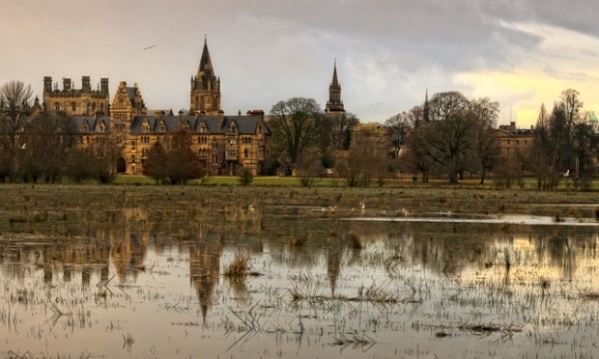
This coming weekend, 1-2nd December 2012, the UfSO will be sending a number of delegates deep into enemy territory (Oxford – psychogeographic centre of educational bad vibes, aristo-fuckery and generalised malign influences…). The reason we undertake this arduous mission is in order to attend the Sustaining Free Universities conference, an initiative guilty of tweaking our collective curiosities owing to the fact that sustenance remains an elusive entity in this austere era of enclosed abundance.
UfSO will send six delegates in total, one from the Coventry chapter, five usually based in London. These are Prof. Riddle, Prof. Karlsberg, Prof. Hackett and Dr. Himmelblau. Original attendee Prof. Pickett has been forced to withdraw due to being caught up in an important mission overseas, Comrades Jean Baton and Dr. Buttercup Bubblefanny will be joining in his stead, which is excellent news.
Prof. Riddle will be journeying down to Oxford along the 77 scenic miles of the Oxford Canal by paddle steamer. The rest of the delegation will be conveyed under the capable wheels of Prof. Karlsberg. However, as Prof. Karlsberg is called away on urgent revolutionary business visiting his Gran on Friday, the UfSO delegation will be taking a detour via grand-filial aventure somewhere in the west of England. Flood waters permitting, we aim to rendezvous in a soggy Oxford in time to glimpse its wet, dreaming spires in all their early Saturday morning glory. It is our hope to offer a report on proceedings for interested comrades, check back for developments.
Some Orientation for the Disoriented
A strange unmarked parcel arrived at our headquarters this morning. We were relieved to find, not debt collection warnings, but some searing insight into the situation of UK Higher Education. With so much state and corporate skulduggery it has been easy to lose track of what has being going on. This fine report from some people called the Education Commission has flipped us back on our heads. Hang on, what. Access via the link below:

Three suggestions for a radical education network

The following piece was writing while thinking about this conference:
http://sustainingalternatives.wordpress.com/
Check it out, the UK Free University Network are organising a meeting for all those involved in radical educative ventures to come up with some concrete plans. I initially thought it would be another of those pointless exercises in talking about what needs to be done without actually doing anything, but these guys are planning to use a very interesting methodology for the meeting taken from the Urban Land Committees in Venezuela. Read about it, we are planning to be involved in some way. Maybe see you there. Anyway, here is what I wrote…
1. Efficiency
We shouldn’t look backwards to smaller classrooms. We should look forward, beyond the neo-liberal classroom, like Marx did through the economic system of capitalism to see the potentials held within it for a truly emancipatory organisation of resources. It’s like mass production – and this is the difference between utopian and critical socialism – Fordist production offered for the first time the means to support the entire world population in its material needs; the problem we have is that the means of mass production are owned by a powerful minority and run for their own profit. The same goes for education. Mass education is a good thing, but it is elitist still. Furthermore, the education system as it is within the capitalist mode of production is designed to reproduce this mode of production, and make it run as efficiently as possible.
The first step to imagining a post-capitalist classroom is to dissolve the student-teacher relationship. I say ‘imagine’ because this is almost impossible to achieve due to the restrictions of the aims of education within the current system. Not only that, it is extremely hard even to imagine a classroom without the teacher-student relationship. The classroom is a very real and structured nexus of social relations, and this nexus reflects the relations of society as a whole. The classroom is a microcosm of society.
The teacher’s only job, until the relations of production are transformed (so that we will find it hard to even imagine the teacher-student relationship as it is today – think of how the smoking ban has transformed the very idea of smoking inside a pub, for example), is to facilitate peer teaching/learning. The classroom should be full of teachers, or rather students teaching each other and learning from each other. This is also the most efficient way to teach. This would also mean there wouldn’t be any need to limit to class sizes. The only remaining practical consideration would then be the physical structure of the room. It would have to be big enough to have space for everyone to move around, and be openly arranged to take the focus away from any individual (as teacher).
The main or most difficult problem we face today is the political-institutional relations of power and exploitation on both sides of the teacher-student divide. Any utopian idea(l)s of radical pedagogy are dashed against the daily grind of institutional goals, monitoring, inappropriate rooms, textbooks, course design, management, etc. The University, for example, has a very real function in the successful operation of a capitalist, global society. The reliance on international students for income is a topical example of this; the classroom is skewed impossibly across language ability, and it is incredibly difficult for even the most politically/ethically conscious lecturer to negotiate these problems. International students, especially at postgraduate level, just haven’t got the language ability that their native/European peers have, and they are doomed to failure a lot of the time. The provisions aren’t provided for these international students to reach the level they need to be at, nor are there the emotional/social support good enough for cultural integration – the University simply takes the money and washes its hands of the consequences of this way of operating.
Also, people never come to you as a “tabula rasa”. Students have been indoctrinated into bad habits of learning, such as short attention span, worrying about exams, not wanting to communicate, etc. A typical undergraduate student at a “new” University has been on the one hand conditioned for a certain way of learning, but also hasn’t had the complimentary training in academic work/skills that students at a Russell group university would have had. If you try to radicalise the classroom, you will meet resistance from students, even though it is supposedly ‘for their own good’. A student faced with radical learning situations will become stressed and demand that you give them what they need to pass their exams. And fair enough.
It’s very hard to overcome these factors as a teacher; the difference is that a teacher can be radical, but a classroom full of students with bad habits multiplies the effects of these negative influences greatly.
2. Positive unemployment
The second step is to imagine mass education without accreditation.
We should take “unemployment” more seriously. Let’s look at it as a positive phenomenon – not just defined as a lack of work, but a potential openness to non-capitalist labour/learning. Like a break down in the smooth running of capitalist reproduction. Yes, unemployment is part of capitalist labour – there needs to be competition amongst the workforce to keep wages low and people desperate to earn a wage. But unemployment is also the bomb waiting to go off in any depressive phase of capitalism – too much unemployment produces unrest, riots, political radicalism, protest. The unemployed individual oscillates across the borders of the system. He/she can go either way.
In terms of education, the first point to take seriously, or at least ironically, is the reality that there is no guarantee of a job after University, no matter how much the employability scores say otherwise. In fact, students can look forward to unemployment in most cases, especially if we critically examine the notion of unemployment and include within it precarious work, working for free, depression, working in shit jobs which have nothing to do with your qualifications.
A radical education can just be honest. We could structure our idea and process of learning in an entirely different way. The dynamic of society and capitalist production drives education in a certain direction, in an almost irreversible logic of progression. No matter what you do as a teacher, the material function of institutional education dictates that students must be accredited so that they can move on to work. But there is no work.
A student worried about exams is not learning, he/she is just absorbing. The empty cup (student) and jug of knowledge (teacher) model of education, although entirely discredited in even the most mainstream of educational theories, and in teacher training courses, is impossible to move beyond while accreditation still operates as defining condition of knowledge acquisition. To link this to the earlier point about the classroom is to remember that 16 years (from primary to undergraduate level) of education is meant to train and pacify people for capitalist labour. This consequently produces an adult who cannot respond positively to free/radical education. The adult student, after this conditioning, demands this “banking model of education”; to radicalise the existing classroom is to make the student very stressed out.
Furthermore, we have a lot of unemployed people in the world today, especially in this time of recession/depression. So why don’t we focus our radical education network towards these people first? They will hopefully have material support from the benefit system (and we can help them use this system better, and perhaps more safely), lots of time, and they are inevitably bored and lonely. With us, they can learn for the sake of learning, and we can start from the basics if needed – survival knowledge (this is to make the point of including the international proletariat in our network, the globalised flow of labour, and also students, that need basic literacy and English in many cases). We can provide a place to meet other people, get out of the house, where one can gain skills that will be useful to get back into work again.
What I am proposing here is that we base our ideas of a network of radical/free education provisions on the anarchist social centres that we saw proliferate during the height of the recent protest movement, and that have been around for decades. These social centres functioned as radical community centres, operating outside the existing welfare system, occupying abandoned buildings right in the heart of a community and opening up social and material resources for that community. Food, books, clothes, bike repair, friendship, etc – all provided for free. These social centres were/are recognised as positive by the local community; although never fully accepted, people who haven’t got what they need appreciate this gesture of radical caring.
This is the way to build a positive movement. Never telling people they are stupid, instead doing things that make a difference and carry an integrity that can be recognised across ingrained political/conservative perspectives.
Our network could be like this; and complimentary to these social centres. Radical education has existed like this before. Wherever it can, for whoever needs it. Find a place somewhere busy, somewhere at the bottom end of the socio-economic scale, open the doors to those who need it and hope that they come.
The university shouldn’t be a model for a radical education. Universities have always been, in their ideological-historical foundations, elitist (racist, sexist, etc) institutions, hobby-horses for the rich and powerful, there to make sure their offspring rule the world in the way that they ruled it[1]. We must find a way to re-imagine adult education outside the existing model of mass education, as training ground for work, and the model of the University, as the training ground for the ruling classes.
3. Practical considerations
We shouldn’t sit around talking at each other about education. We don’t need conferences about education. We shouldn’t waste time talking about theory. All theory does is intimidate people and dodge potential criticism. When we introduce theory into our conversation, we only alienate the “uneducated” (or uninitiated), and make it hard for anyone else to say ‘That is bullshit’. When you include a theoretical layer to a conversation, you then have to move any counter-argument up to that theoretical level and be able to criticise the theory, not the original point. And we all know what an industry we have made out of arguing about theory. There are no results, only papers, conferences and political apathy.
We need to talk. For hours, days, weeks, months, years. Until this thing is done. Until we have worked out where to begin, and begin in the right way. We need to have steps. Small steps that will be easy to follow with new steps. Creating a network of radical education will be very hard; everything is against us. Which is why we must be practical and honest; realistic, not idealistic.
I think that a network is paramount, based on the idea of solidarity, and not just the ‘solidarity’ one says at every other march or meeting. A network based on a solidarity which means commitment to supporting one another. A network is flexible and is not necessarily undermines by the failure of one part. A network can also be national/global, and not just based in cultural hubs like London.
In the workplace nothing can get done on the side of labour without solidarity; an individual will find it incredibly difficult to win anything (in terms of rights) from the company. A united workplace has so much more power than the individual, and each person is protected (as much as you can be) by that solidarity.
The same goes for a network of radical education. Isolated ventures will not survive. They will also not get anything done. They will always be utopian experiments, whose only value will be as historical cases of failed but interesting experiments.
However, it is important to remember is that we are all different. We mustn’t pretend that we aren’t utterly individualised in this capitalist world. There is perhaps a new stage after the extreme individualism of today, that will be an Aufhebung (synthesis) of individuality and solidarity. We don’t want to go back to the naive and dangerous practice of “communism” we read about in history books and novels such as that of Milan Kundera. This is the forced community that lead to the totalitarianism of Russia and other false socialisms.
Everyone has their strengths, and most importantly we have our commitments. We must be able to be in love, stay in bed, be swamped by our jobs, get drunk, lose our faith and drift away for a bit, fall out with each other, be arrogant, and so on. I learned this from my time in the University for Strategic Optimism. Organising without hierarchy was the hardest thing in the world, but we managed it, for a year or so. Sometimes there were loads of us, sometimes only a couple. This is why we need a network of committed individuals, and also of groups of individuals. We must organise like family resemblances, open connections. When one person drifts, someone takes up the slack for a bit. With enough people, free people who have their passion engaged in this project, it might just work and grow.
[1] Like the idea of “middle-classness” that was sold to the working class in the 50s, and again in the 90s, the average person is sold an idea of university education, that only the rich actually enjoy ( at Russell Group universities, and their students are trained for this. They don’t really learn anything; they just have a good time, absorb some bullshit and move on the next stage of mummy and daddy’s master plan).
Goldsmiths and the Racist Attacks On Staff and Students
A meeting to organise against immigration controls on campus.
Wednesday 31st October // 1pm // Goldsmiths, outdoor square in the centre of Richard Hoggart Building (by the canteen) //
All welcome!
Goldsmiths Migration Solidarity
Following from the government’s election pledge, seeking to pander to racists and xenophobes, that immigration would be reduced by 90%, international students have been targeted as a way of implementing these reductions. These changes have happened alongside a privatization agenda that seeks to make education make money for those that already have the majority of it. The relationship between these twofold aims – reduction of immigration and privatization – is by no means clear or non-contradictory. The removal of state funding for higher Ed intensified the need for universities to recruit international students so that the shortfall in funding might be patched up by the premium paid by international students. However, the atrocious and exploitative treatment of international students has intensified despite the increased need for their money. The UKBA recently saw fit to remove London Metropolitan University’s ability to sponsor visas because of perceived faults in their surveillance of the international students enrolled there. Thousands of students were forced into the precarious position of awaiting the appeal against this decision, finding other universities who would allow them to continue, or terminating their studies and leaving the country. That this has occurred first at London Met is telling, both because it has more students of colour than the entirety of the Russell Group Universities, and also because it was being positioned at the forefront of experiments in the privatization of Higher Ed.
Three years ago, when the government announced its intention to make university professors act as border agents by forwarding attendance records to the UKBA, staff and students at Goldsmiths built a strong campaign and publicly refused to comply. Goldsmiths members of the UCU have reaffirmed this position of non-compliance with a recent statement. The removal of the London Met’s right to issue visas is designed to send a clear warning to other universities. Goldsmiths Senior Management, in response to this, have hired a UKBA compliance officer to ensure the university fulfills the racist and fear-mongering techniques of border building and classroom surveillance stipulated by the state. We refuse the false divisions between staff and students, or between international and home.
We will not be complicit. We will not comply.
Notes on What a Radical Pedagogy Might Feel Like

In this month’s issue of the regular newspaper of Occupy London, the Occupied Times, esteemed UfSO professor Shelley Hydra considers what radical pedagogy might feel like.
Get hold of a copy, or read it online here: Occupied Times #17. Alternatively, we’ve made a PDF of the article itself available: notes on what a radical pedagogy might feel like.
Statement Concerning Events at London Met

As students of the UfSO, and as internationalists, we extend our solidarity to the unjustly-maligned students of London Metropolitan University.
These students, through no fault of their own, are having their lives potentially seriously damaged. Why? As a result of the pathetic attempt to scoop a racist headline on the part of an illegitimate government of rich. This governement of the rich, who toy with students’ lives in order to massage their arbitrary immigration targets, are the same rich who themselves are able to travel at will, and who have already bought their way into the ‘best’ universities. They deserve, and indeed receive, nothing but our utmost contempt.
Yet this is more than a heartless piece of figure-massaging. There is a real danger that this is a thinly-veiled attempt at pushing for the full privatisation – under the guise of rescue – of a university already betrothed to a host of the familiar outsourcing parasites we have come to know and loathe. Meanwhile it reeks of an opportunist attack on a university with one of the broadest intakes of students in the country, and some callous attempt to ram home the malicious, elitist dream of a two-tier higher education system.
Make no mistake, part of their class plan, when introducing, and then raising fees to exorbitant levels, was not only the marketisation of university, but also the degradation of critical thinking, and its enclosure in the hands of a few members of their trusted class. Now they are pushing an agenda that seeks to forcibly divide higher education – under-resourced, private training camps for the masses, ivory-white towers, with wet-dreaming spires for the few.
We say no! When they wanted to shift the burden of paying for education from society to the student, it was the international student they came for first. We did not resist and they came for the rest. Not only are they fully prepared to ruin several thousand people’s lives, simply in order to look tough to morons in thrall to the tabloid ballot-box fiction of pseudo-democratic piggy politics. If they succeed here, they will potentially use their bureaucratic horseshit over immigration to financially undermine any university they please, deploying it as a weapon to further their privatisation agenda. Having turned higher education into an international marketplace, they no doubt will seek to use the financial instability caused by this as cover for further marketisation. They seek to use the increasingly crisis-prone folly of an already over-marketised system to further the cause of marketisation – where have we heard that before? In this they see international students as nothing but cannon fodder in their class war. They want to make pawns of people’s lives for their pathetic, cowardly and racist agenda, an agenda they will inflict under the tattered, union jack umbrella of popular jingoism that so often characterises this jaded, spiteful country.
As the real bogus students of the UfSO, we extend our solidarity to the falsely decried students, suffering the life-ruining personal consequences of the risible, racist manipulations of a powerful clique intent on divide and rule. Fuck that, and fuck the nondescript camp-guards of the UKBA (the Bureaucratic Arsehole division of the Unaccountable Kingdom) who enforce this trash.
- We demand the immediate removal of any threat of deportation for any London Met. students.
- We call for the non-co-operation of all universities, their staff and students, in the enforcement of the government’s racist policing of international students. Are we here to learn and teach, or to act as the government’s proxy border police force?
- We politely request that the NUS cease pretending to represent the interests of students and admit that their organisation is a hatchery for sycophants seeking to suck and lick their way into parliamentary politics. Or else prove us wrong. No? Didn’t think so.
- We call for the abolition of the UKBA and the resignation, followed preferably by the jailing, of this entire illegitimate and dangerous government. It is not fit for purpose.
Love,
the interminable committee of The University for Strategic Optimism
xx
 University For Strategic Optimism